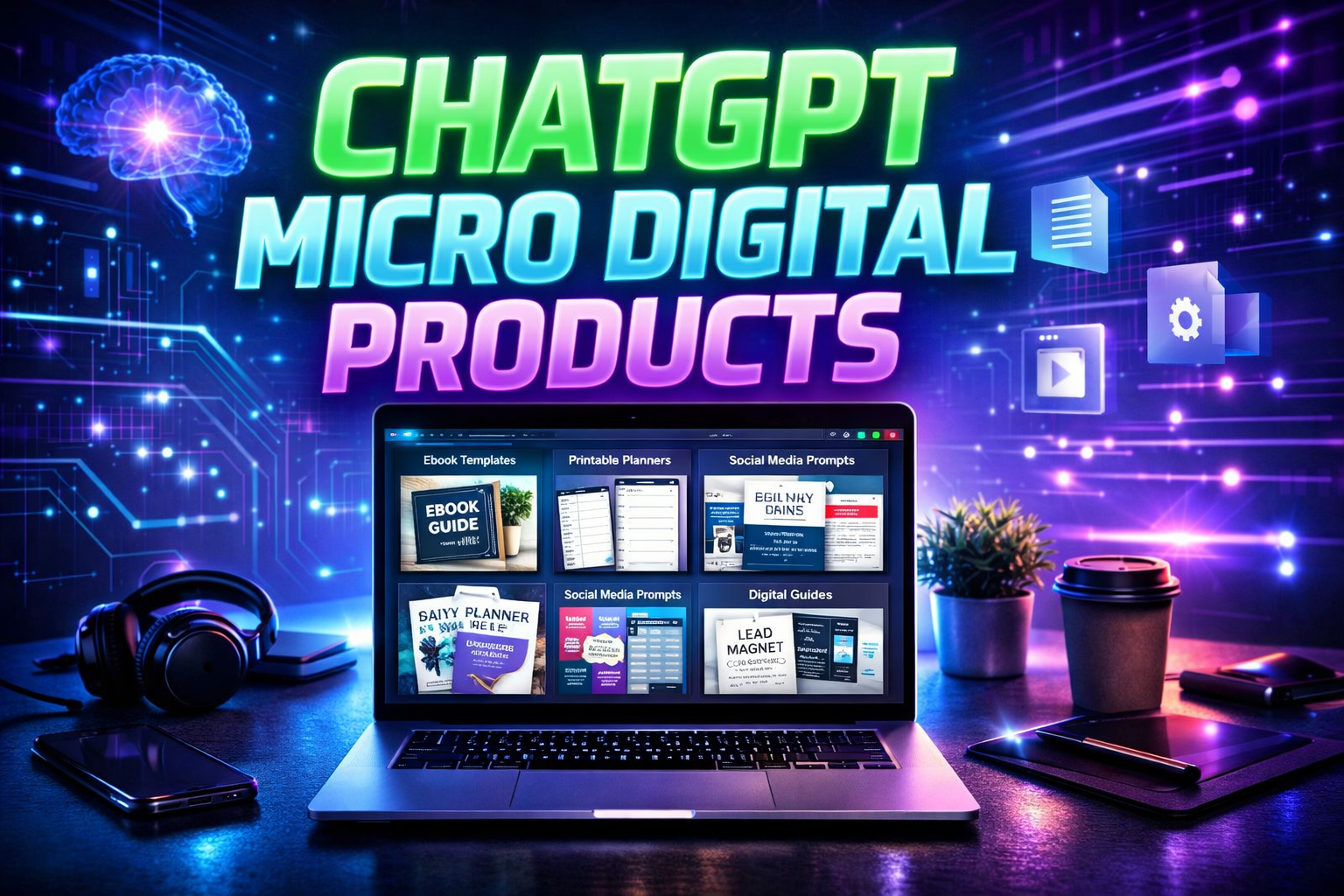
The digital product economy has changed dramatically in the past few years. In 2026, one of the fastest ways beginners are starting online businesses is by creating micro digital products using AI tools like ChatGPT. These are small, focused digital assets designed to solve one specific problem for a specific audience.
Unlike large courses or complex software, micro digital products are simple to create and easy to sell. They can include prompt packs, templates, short guides, content frameworks, checklists, worksheets, or small toolkits that help people accomplish a task faster.
ChatGPT makes this process much easier. Instead of spending weeks writing content or planning product structures, you can use AI to brainstorm ideas, build product frameworks, write supporting materials, and refine your product for your target audience.
In this guide, you will learn how beginners can use ChatGPT to create and sell micro digital products step by step.
What Are Micro Digital Products?
Micro digital products are small digital resources that solve a single problem quickly. They are usually inexpensive and easy to deliver online.
Examples of micro digital products include productivity templates, prompt packs for creators, social media caption libraries, business checklists, planning worksheets, or niche guides.
The main advantage of micro products is speed. Instead of spending months building a large product, you can launch a simple digital asset quickly and test whether people are willing to buy it.
This makes micro products ideal for beginners who want to learn how digital product businesses work.
Why ChatGPT Is Useful for Creating Digital Products
ChatGPT can assist with multiple stages of product creation. It can help you brainstorm product ideas, structure content, generate useful resources, and even write the product description you will use on sales platforms.
AI does not replace creativity, but it dramatically speeds up the research and writing process.
Instead of staring at a blank page, you can use ChatGPT to generate outlines, examples, or structured frameworks that you can refine into a finished product.
This allows beginners to move from idea to product much faster.
Step 1: Choose a Simple Problem to Solve
Every successful digital product solves a specific problem. Instead of creating something broad, start with a narrow problem.
For example, a freelancer may struggle with writing client proposals. A beginner blogger may struggle with content planning. A social media creator may struggle with caption ideas.
When you identify a small problem, you can create a micro digital product that offers a quick solution.
You can ask ChatGPT to generate common problems faced by your target audience and identify opportunities for micro products.
Step 2: Generate Micro Product Ideas Using ChatGPT
Once you know your audience, ask ChatGPT to generate digital product ideas.
For example, if your audience is beginner bloggers, ChatGPT may suggest content calendar templates, blog outline frameworks, SEO prompt packs, or keyword research checklists.
Review the suggestions and choose one idea that is practical and useful.
The goal is not to create a large product but something simple and focused.
Step 3: Build the Product Content
After selecting your product idea, use ChatGPT to help structure the product content.
If you are creating a checklist, ask ChatGPT to generate a step by step list. If you are creating a prompt pack, ask it to produce structured prompts for your niche. If you are building a short guide, ask for a clear outline and expand each section.
At this stage, it is important to review and refine the AI output. Improve clarity, remove unnecessary text, and ensure the product is easy to use.
Your micro product should deliver value quickly.
Step 4: Format the Product Professionally
Once the content is ready, format it in a simple document or template format. Use clean headings, short explanations, and clear instructions.
If you want to improve the design, you can use beginner friendly design tools to convert the content into a visually appealing digital resource.
Even a simple PDF guide can become a valuable product if it solves a real problem.
Step 5: Create a Product Listing
Before selling your product, prepare a clear product listing that explains what buyers will receive.
Your listing should explain the problem your product solves, who it is designed for, and how it helps the user save time or achieve results.
ChatGPT can help you write persuasive product descriptions and suggest keywords that improve search visibility.
A clear and honest description builds trust with buyers.
Step 6: Choose Where to Sell
Micro digital products can be sold through digital product marketplaces or your own website.
Many beginners start with platforms like Gumroad because they are simple to use and allow instant digital delivery.
Another option is selling through your own website, which gives you full control over branding and pricing.
Whichever platform you choose, focus on clarity and value in your product presentation.
Realistic Income Expectations
Micro digital products are not usually expensive. Many sell between five and twenty dollars depending on complexity.
However, the advantage is scalability. Once your product is created, it can be sold repeatedly without additional work.
Many creators eventually build libraries of micro products, allowing them to earn consistent income from multiple small digital assets.
This approach works best when combined with consistent product creation and audience building.
Beginner Action Plan
The best approach is to start small. Choose one simple problem and create a micro product that solves it clearly.
Launch your product, collect feedback, and improve it. Then create another product that complements the first one.
Over time, this process builds a catalog of useful digital resources that can generate recurring income.
Common Beginner Mistakes
Some beginners try to create overly complex products instead of simple solutions. Micro products work best when they focus on one clear task.
Another mistake is copying generic AI output without adding personal refinement. Always review and improve your product before selling it.
Finally, some creators focus only on product creation and ignore marketing. Even the best digital product needs visibility.
Scaling a Micro Digital Product Business
Once your first product gains traction, you can expand your product line.
Create related products that serve the same audience. For example, if you created a blogging checklist, you might also create a blog content planner or keyword research framework.
Bundling several micro products together is another effective strategy. Bundles increase perceived value and allow you to charge higher prices.
Over time this approach turns a simple micro product into a structured digital product business.
Final Thought
Using ChatGPT to build and sell micro digital products is one of the simplest ways to start an online business in 2026.
AI tools help reduce the time needed for brainstorming, writing, and structuring digital products. When used correctly, they allow beginners to create valuable resources quickly.
Start with a small problem, build a simple solution, launch your product, and continue improving based on feedback.
Consistent creation and problem solving are the keys to growing a successful digital product business.
If you want to learn more about AI tools and online earning, visit our homepage for step-by-step guides.